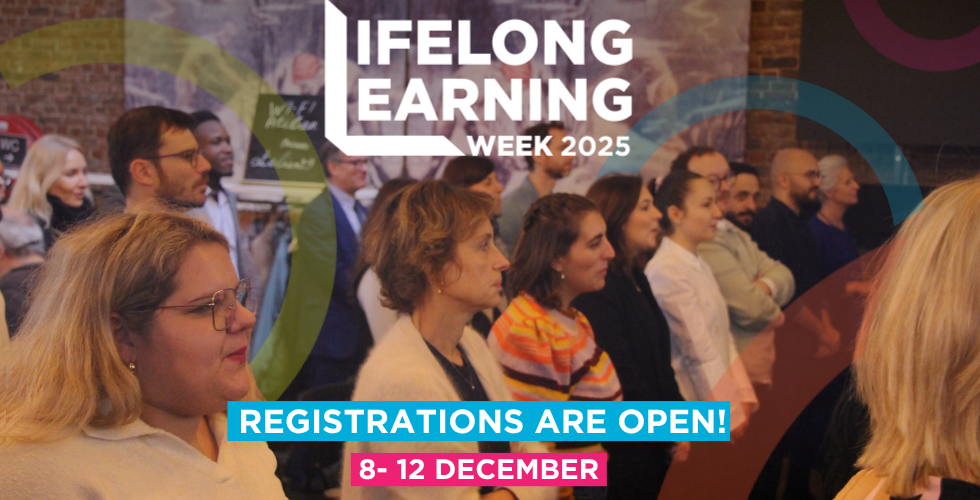
From 8 to 12 December 2025, the Lifelong Learning Platform will host the 15th edition of the Lifelong Learning Week (LLLWeek) as part of its 20th anniversary celebration. Each day of the week will focus on one of LLLP’s renewed priorities: Investment, Inclusion, Innovation, Internationalisation and Intermediaries.
LLLWeek will start with the European Lifelong Learning Stakeholders’ Forum on 8 December, during the day dedicated to Investment. This year, the Stakeholders’ Forum comes at a time when the EU’s flagship programme, Erasmus+, is being renewed and the negotiations for a new EU budget just started; creating an opportunity for civil society networks as well as broader education and training providers to confront their perspectives and expectations for the next Multiannual Financial Framework (MFF) and help shape the next steps in ensuring education and training are at the heart of the EU budget.
After the forum, LLLP will celebrate its 20th birthday and the beginning of the LLLWeek with an Opening reception that will include the announcement of a renewed Lifelong Learning Manifesto. The LLLWeek events are free and the programme includes a wide range of topics from digital inclusion to micro-credentials, VET as a boost for competitiveness to the role of teachers in citizenship education, so make sure to explore the events and sign up for as many as you want!
2026 has been proclaimed by the UN General Assembly as the International Volunteer Year (IVY2026), recognising and celebrating the vital role of volunteers in achieving the Sustainable Development Goals 2030. IVY206 will highlight how volunteering and volunteer-driven action contribute to progress and development on diverse issues, particularly sustainability, climate, inclusion and community resilience.
The Centre for European Volunteering (CEV) is taking a leading role in the preparation and celebration of the year, ensuring that the volunteering and volunteers in Europe are visible, celebrated and connected throughout the year and beyond. Some of the initiatives CEV is involved in include the Global Call to Action; the partnership with other international non-governmental organisations in the context of the Thematic Committee on IVY2026 of the Conference of INGOs of the Council of Europe, and the coordination of the IVY2026 EU Action Forum. This will promote exchanges at EU level for volunteering stakeholders, as well as promote policy analysis and advice at EU level.
As IVY 2026 approaches, CEV invites organisations, public authorities, and citizens to get involved and to share their inspiring stories, join local activities, and champion the power of volunteering in everyday life, especially that which contributes to achieving the SDGs. Together, we can make IVY 2026 not only a celebration but a turning point for stronger, more sustainable Collaborative Communities across Europe and beyond.
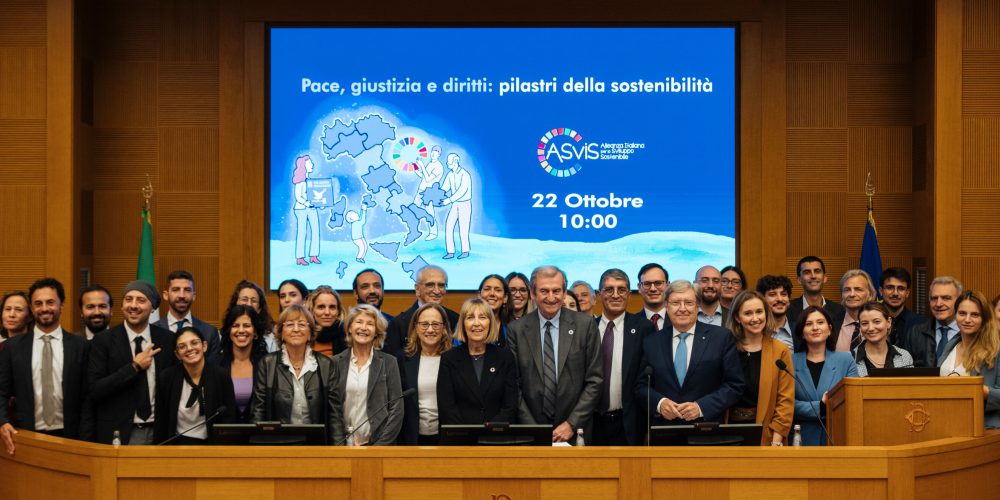
Ten years after its first Report, ASviS renews its commitment to the 2030 Agenda. “We are stubborn, but not blind,” the document states – reminding that, despite growing geopolitical tensions and social divides, sustainable development remains the only way forward to ensure peace, democracy, and justice for future generations.
The 2025 Report warns that the world is on track to achieve only 18% of the SDG targets by 2030, while wars, inequality, and the climate crisis deepen. It highlights how the European Union, once a global leader in sustainability, is now struggling with contradictions between its commitments and concrete policies.
In Italy, progress towards the SDGs remains slow: only 29% of national targets are within reach, with setbacks on poverty, inequalities, and environmental protection. ASviS calls for a “Transformative Acceleration Plan” to guide the country towards the 2030 Goals, and urges Parliament to approve a law on Generational Impact Assessment, a key tool to protect the rights of future generations enshrined in the Italian Constitution.
The Report proposes actions to strengthen governance, boost social cohesion, and accelerate the green and digital transitions from renewable energy and circular economy to education, innovation, and fair labour. Its message is clear: achieving sustainable development means uniting peace, democracy, and environmental protection because “reconciling with the environment,” as Italian President Mattarella said, is the path to a fairer future for all.
With only five years left until the 2030 Agenda deadline, and ten years since the adoption of the Paris Agreement, renewing our commitment to sustainable development is more urgent than ever. We must ensure equity and well-being for present and future generations. Turning global goals into concrete actions requires engaging people and making them key players in this transformation. In this context, ASviS, in collaboration with Pubblicità Progresso, has launched “Diritto al Futuro” (Right to the Future). This campaign celebrates the inclusion of environmental protection in the Italian Constitution- modifying articles 9 and 41- in 2022. This reform enshrined the principle of intergenerational justice, recognising the need to safeguard the planet for future generations. Diritto al Futuro aims to raise awareness and promote concrete action. Have a look at our spot here. Aligned with this vision, the 2025 Sustainable Development Festival will take place from May 7 to 23, organised by ASviS its organisations. As Italy’s largest sustainability event, the Festival will present policy proposals on ecological transition, biodiversity, social justice, and innovation.
Through the Diritto al Futuro campaign and the Festival, ASviS invites everyone to join the movement for a fair and sustainable future- leaving no one behind.
This July, the city of Seville (Spain) will host the IV International Conference on Financing for Development—an essential opportunity to advance towards a fairer, more inclusive, and sustainable global financial system. Following the missed opportunity at the 2024 Summit of the Future, this conference could unlock the resources needed to close the estimated $4 trillion annual financing gap to achieve the Sustainable Development Goas.
When compared to the $7 trillion in public funds allocated to fossil fuel subsidies in 2022 and the $2.44 trillion in global military spending in 2023, this target is within reach—if there is political will.
But funding alone is not enough. Structural reforms are essential: the fair taxation of extreme wealth, the cancellation of illegitimate debt, the enforcement of Official Development Assistance commitments, accountability for private sector actors, and the democratization of international financial institutions. The Seville conference is a key opportunity for governments, institutions, and civil society to come together and drive transformative change—rooted in justice, sustainability, equality, and historical redress.
We know that, in recent times, the international landscape has shifted, making it even more difficult to reach broad consensus, but it is crucial not to lose sight of what is at stake and to push forward with all our strength.
A strong and active civil society is essential to achieving ambitious outcomes in the Financing for Development process. In this context, Futuro en Común, together with La Coordinadora and the Andalusian Coordinating Platform of Development NGOs, is supporting the Civil Society Mechanism for FfD in organizing the Civil Society Forum, which will take place in Seville on June 28–29, 2025. Besides, we are also creating a space that connects local, national, and global efforts to collectively organize public mobilizations.
Your presence matters, and we hope to see you in the streets, raising your voice for financing justice.
Motherhood remains an under-explored and insufficiently addressed topic in both policy-making and societal discourse leading to unmet needs and unseen challenges. To bridge this gap, we conducted asurvey, gathering insights from 9,600 mothers across 11 EU countries and the UK.
The findings were a revelation on many fronts, showing just how much work still needs to be done. A few striking figures:
35% of fathers in 12 European countries have not taken their paternity leave, even though it is their right. Meanwhile, 50% of mothers report struggling with at least one mental health issue. Cultural norms, workplace pressures, financial and social barriers – so many obstacles still stand in the way of true equality in caregiving.
That’s exactly why we do this work at Make Mothers Matter: to listen, study and bring to light the realities of motherhood – without judgement, but with a call to action. Because change is possible. Because we all have a role to play in building a more inclusive and just society.
Here is the full report which we hope will serve as a tool to drive meaningful conversations and policy change.
From what mothers told us, it’s clear that maternal mental health cannot wait. The pressure on them has never been greater. General instability, rigid work structures, and the rising cost of living are worsening their stress levels. The time to act is now—to break the stigma, provide proper support, and ensure that maternal mental health is a political priority.
In response to this need, we’ve just launched a petition calling to End the Maternal Mental Health Crisis in Europe NOW.
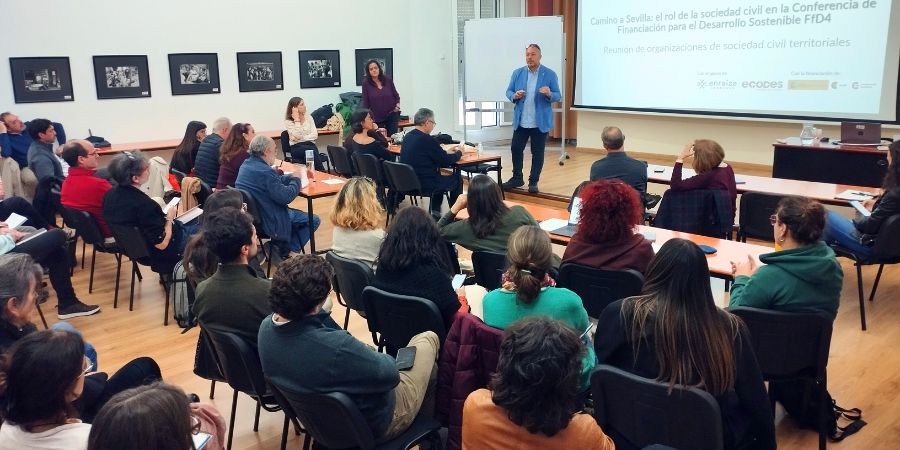
SDG Watch members from all over Europe met in Brussels on the 4th and 5th November for the SDG Watch Europe Annual General Assembly and the Civil Society Forum for Sustainability. Over 70 CSOs with an interest in just transition, participation, social justice, and climate environmental sustainability were present to deliberate on the future of the European Green Deal and to discuss and strategize on the SDGs and Agenda 2030.
Civil society strategize for 2024-2029
The AGA took place back-to-back with the Civil Society Forum, organized by SDG Watch Europe, EEB and SOLIDAR in the framework of the REAL DEAL project, a Horizon 2020 project on deliberative democracy and the European Green Deal (EGD). The forum provides a space for CSOs from across Europe to come together and exchange views on topics related to the European Green Deal and the SDGs.
On day one, CSOs met at the Elzenhof for a packed event on strategic priorities for civil society engagement within the upcoming 2024-2029 EU mandate. The panel, moderated by Hanna Gunnarrson of WECF, opened with reflections on the recent UN Summit of the Future. Ingo Ritz, Director of Global Call to Action Against Poverty, noted that the Summit highlighted the increasing polarization between the Global North and South, especially around issues like debt and economic justice. Ingo raised concerns about the shrinking space for civil society in global governance processes, with civil society sidelined in major discussions. He pointed to the upcoming 2025 World Social Summit as a critical venue where civil society can push for stronger engagement.
The panel then heard from Patrizia Heidegger, Deputy Secretary General of the EEB, who noted the progress on environmental goals praised civil society’s mobilization efforts, noting significant legislative wins under the EGD, including stricter regulations on resource use and waste, more robust climate targets, and new ecodesign standards. Despite these advances, major obstacles remain, including inadequate fiscal commitments to support decarbonization and dematerialization. From the social justice perspective, Mikael Leyei, SOLIDAR’s Secretary General, highlighted troubling trends in social justice, with poverty rates on the rise and social indicators declining. Mikael noted that a coherent policy framework for a just transition is essential and called for better integration of social and environmental justice goals. Mikael also noted the growing influence of nationalist and far-right movements within EU member states. He urged civil society to mobilize nationally and within the EU, building broad alliances to counter anti-democratic trends and ensure that social and environmental justice remain priorities in the next EU mandate. Overall the panel set the scene as to how the EU should move forward on SDG implementation, emphasising economic system change, social justice, a just transition and the need for greater adherence to the principle of policy coherence for sustainable development in all EU actions and policy processes.
Across the two-day Forum, nine thematic civil society workshops were held and SDG Watch Europe’s members heard from a variety of inspiring speakers from the academic and civil society spheres, as well as collaborating to develop policy recommendations for the incoming European Commission and EU Parliament. Alongside the workshops on emerging themes for civil society, a closing dialogue with civil society organisations was held to reflect on their ideas at the end of the two days of discussions.
AGA Key updates
During the Annual General Assembly on the 4 November, elections to the Steering Group were held. SDG Watch Europe would like to thank the outgoing members of the Steering Group for all the incredible work they have done throughout their mandate. Members applauded Laura de Bonfils (Social Platform), Sarah Franklyn (Independent), Stéphanie Ghislain (Eurogroup for Animals) and Jacob Bjelskov Jørgensen (Nyt Europa), who will all be stepping down from the SDG Watch Europe Steering Group after completing their terms.
New Members of the SDG Watch Europe Steering Group
SDG Watch Europe hereby congratulates and welcomes three new steering group members who were unanimously elected to the Steering Group at the AGA; Katja Reuter of Social Platform, Justina Kaluinaite of the Lithuanian NGDO Platform and Valeria Fantini of the European Association for Local Democracy (ALDA). In addition, SDG Watch Europe warmly welcomes back Robert Krizanic (Povod) and Manuela Gervasi (EEB), who were re-elected to the Steering Group for one additional term.
SDG Watch Europe also set priority focus areas for 2025 that will be crucial to work on in order to advance its mission of SDG implementation. SDG Watch Europe will continue to focus on the ambitious implementation of the SDGs by the EU institutions in the 2024-2029 mandate. In addition, the network will address new narratives for sustainable development, moving beyond competitiveness, deregulation and disinformation, towards a global wellbeing economy. Another key priority area for 2025 is the financing for the SDGs, including the Upcoming Multiannual financial framework (MFF) negotiations and the 4th International Conference on Financing for Development. Lastly, members highlighted the importance of the EU’s international development cooperation and the Global Gateway Strategy, moving towards global justice.
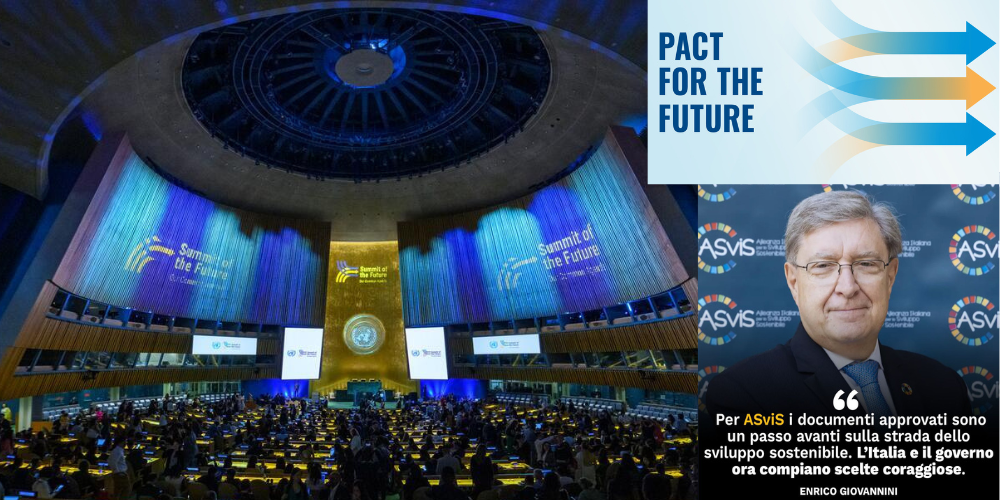
The Summit of the Future was held on 22 and 23 September at the United Nations headquarters in New York. During this high-level event, the UN Member States, including Italy, adopted the “Pact for the Future”, the “Declaration on Future Generations” and the “Global Digital Compact”.
Covering a range of issues from nuclear disarmament to climate change, and human rights to digitalization, the Pact for the Future contains 56 actions. According to the United Nations, it is the most significant international agreement in recent years. ASviS Scientific Director, Enrico Giovannini, also noted that the approved documents are a step forward on the road to sustainable development.
The Pact was created with the aim of strengthening cooperation between countries and intensifying efforts to achieve the Sustainable Development Goals of the 2030 Agenda. These remain key reference points for guiding political, economic, and social decisions at both the international and national levels.
The road to achieving these Goals is certainly not without challenges, and ASviS will soon take stock of the delays and progress of the 2030 Agenda in Italy and Europe with the presentation of its ninth Report, on 17 October in Rome, which will also be live-streaming. Among other analyses, the Report will include, among other analyses, scenarios for the SDGs in 2030.
More than 20 workshops, events and networking moments will accompany this iconic event as we explore the needs and challenges of educators today. Topics will range from digital competences, to the question of neutrality, issues of representativeness in decision-making to working conditions, and from teachers in formal settings to all other sorts of educators, this LLLWeek promises to deliver!
One highlight? Our EU Lifelong Learning Stakeholders’ Forum, on the afternoon of Monday 18 November, will assess the Erasmus+ programme and its ability to be inclusive and support all learners on their lifelong learning journey.
Do not miss out! Head over to theLLLWeek main page, browse all events and register for as many as you wish!
In this position paper, the Lifelong Learning Platform (LLLP) explores the importance of developing key competences that learners need to adapt to any future societal challenge, in line with SDG 4. The paper examines what learners require to strengthen their resilience in an ever-changing world, while also considering the impact of recent crises such as COVID-19, Russia’s war of aggression in Ukraine, the climate crisis and the rampant digitalisation of societies.
The position paper offers recommendations for changes at the system level, provider level and learner level to introduce a new approach to competence development. The main focus is on the need for a whole-of-government approach that includes all education and training stakeholders in the decision-making and implementation of policies. Additionally, it emphasises the importance of recognising the diversity of learning providers and the competences learners need to actively participate in their own learning journey.