SDGs News from Ireland: Parliamentarians for the Global Goals

By SDG Watch Europe

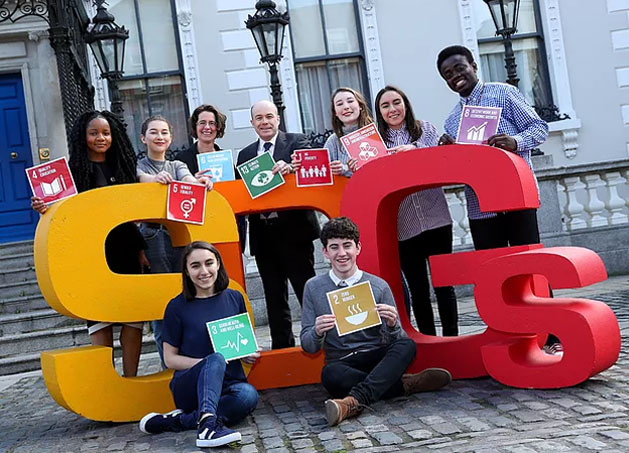
The positive vision & blueprint offered by the SDGs are more important than ever in a time of global crisis.  Senator Alice-Mary Higgins launched the Oireachtas All-Party Parliamentary Group on the SDGs as part of the launch of Parliamentarians for the Global Goals (PfGG) at the United Nations General Assembly earlier this year.  PfGG is a new initiative by and for parliamentarians to promote the SDGs through parliamentary actions around the world. The group will be working to implement the SDGs in bringing together the environment, equality, society, economy and culture and which offer a shared and transformative vision of what it might look like to live together on this planet. 

“Our Group on the SDG’s is part of Parliamentarians for the Global Goals, a wider network of public representatives from across the world driving the decade of action on the SDGs I was glad to give one of international testimonies to mark UN launch of the PfGG”, Senator Higgins remarked. 

2030beyond is a non-profit do-tank for the 2030 Agenda, supporting Parliamentarians and people to accelerate action for the Sustainable Development Goals.

https://www.2030beyond.org

Marc O’Casathaigh, Green Party TD & Co-Chair of the All-Party Parliamentary Group on the SDGs, introduced a proposal to the Dáil Reform Committee that the SDGs be enshrined in the Standing Orders of the committees, which was adopted.  As a result, the SDGs will now be enshrined in all of the committees programmes of work.  SDGs targets will be mapped onto the work of the specific/relevant  committees.  

Key functions of the committees are: 

  •         Legislation – scrutiny of draft legislation in advance of its publication or before Committee Stage; consideration and amending of Bills on Committee Stage; and consideration of draft EU legislative proposals. 
  •         Scrutinising the work of Government Departments – Ministers appear before Oireachtas committees to answer questions concerning all policy, expenditure and governance matters regarding their Departments.
  •         Advising on policy issues – seeking submissions from and holding hearings with third parties; and conducting off-site visits and drafting reports outlining the committee’s findings and recommendations with a view to influencing policy decisions or legislation.

There are calls to align the SDGs into county development plans and to urge the relevant committees to start with hearings to critically consider the coherence among the SDGs.   


Wardrobe Change: Reimagining Fashion

By World Vision Ireland

The current pandemic has forced many planned events to be cancelled, changed and postponed. The MESA implementing partners in Ireland – World Vision Ireland and the Irish Environmental Network – had planned a conference focusing on SDGs, Fashion and Waste during Fashion Revolution Week. However, like many others, we had to rethink our plans and cancel the event. These times call for flexibility, creativity and the internet. As we are no longer able to host the conference due to current restrictions, we have adapted our plans. 

We are excited to announce our new podcast series “Wardrobe Change: Reimagining Fashion”, a four-part series exploring the potential for the fashion industry to achieve the Sustainable Development Goals (SDGs). Set in the context of the current pandemic, it focuses on the impact of waste created by the fashion industry and addresses the need to rethink how we make, wear and re-wear our clothes for a more sustainable future for both people and planet. 

We are delighted to have the support from Kerry Bannigan, founder of UN Conscious Fashion Campaign, who will moderate the conversations with other experts and passionate people in this field, such as: Carrie Ann Moran, country coordinator of Fashion Revolution Ireland; Lynn Wilson, Circular Economy Wardrobe; owners of local startups; and many more. 

To access the podcast, please visit: http://sdgsforall.ie/wardrobe-change/

IRELAND: Presenting the Rediscovery Centre: the Irish National Centre for the Circular Economy

By Laura Niessen, Rediscovery Centre

The Rediscovery Centre is a creative space connecting people, ideas and resources to support low carbon living. We bring together the skills and expertise of artists, scientists, designers and craftsmen united in a common purpose of sustainability through resource efficiency and reuse. As the Irish National Centre for the Circular Economy, the Rediscovery Centre supports the development of a circular economy and advocates for a more resilient, equitable society.

The Centre is situated in a state-of-the-art ecological building. The Ballymun Boiler House was refurbished through the WISER LIFE project (www.wiserlife.eu) and demonstrates best practice building design, construction and operation. It also defines the building and environs as an educational tool to inspire, inform and lead positive behavioural change with respect to resource management and efficiency.

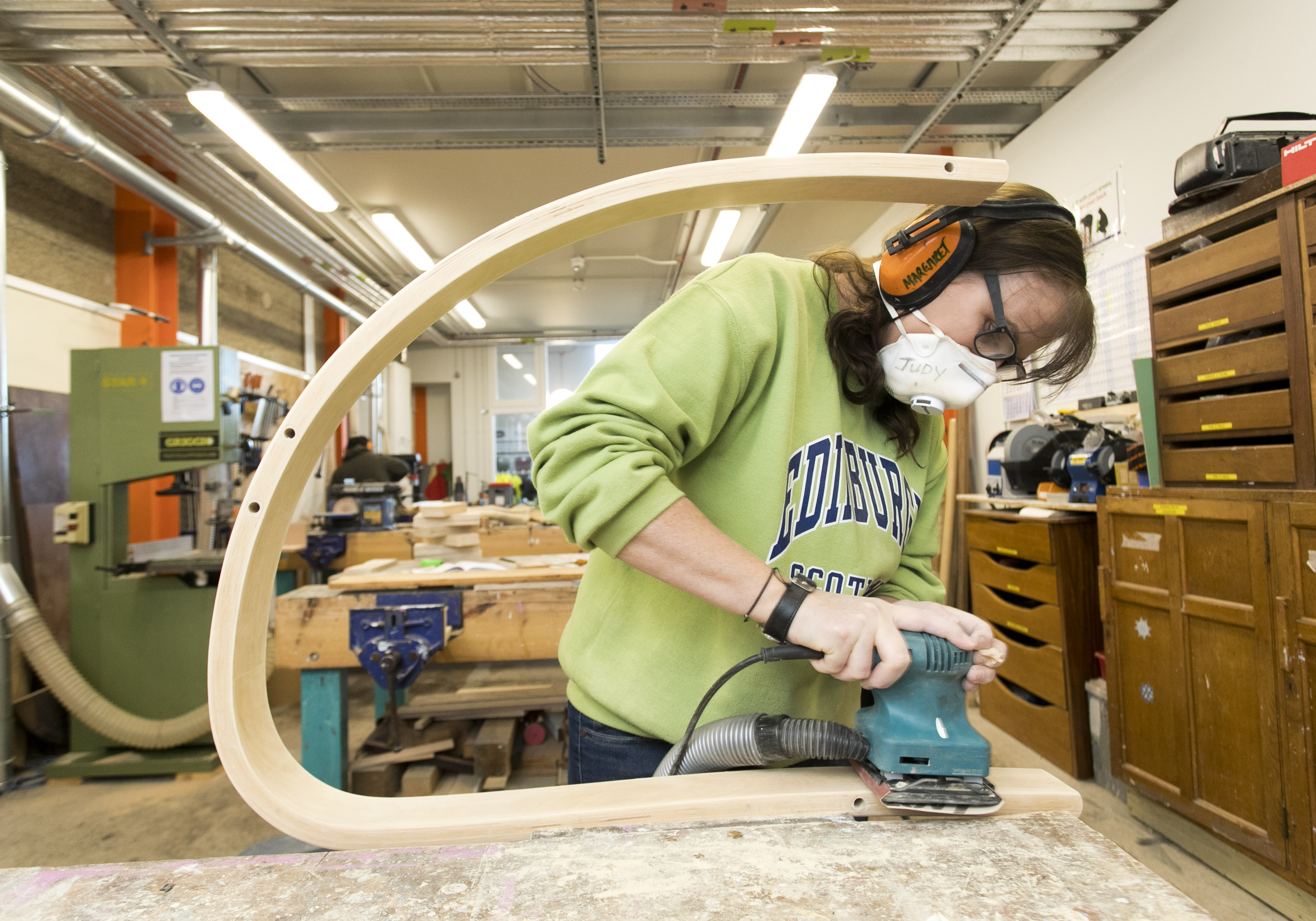
The Rediscovery Centre hosts a wide array of activities. Environmental education for sustainable development and STEAM (Science, Technology, Engineering, Arts and Maths) is provided to students of all ages and varying needs. Research programmes investigate reuse and circular economy opportunities in Ireland and policy work aims to promote sustainable consumption, climate action and the Sustainable Development Goals. The Centre hosts four reuse social enterprises Rediscover Fashion, Rediscover Furniture, Rediscover Paint and Rediscover Cycling. All businesses use discarded materials which are repaired and upcycled to new products. These creations as well as products from over 40 established and emerging Irish eco-designers are available in the Centre’s Ecostore.

All Rediscovery Centre activities support the implementation of the Sustainable Development Goals. Education workshops promote sustainable development, global citizenship and sustainable lifestyle with children and adults alike (SDG 4). We also input to the development of the national school curriculum ensuring the inclusion of sustainability elements. Through advocating and teaching about the circular economy and sustainable living, we drive sustainable consumption. Through our social enterprises we enable youth and others distanced from the workplace to access education and training through our work-based skills training programmes: supporting the provision of decent work and economic growth (SDG 8).

As the National Centre for the Circular Economy, a key focus of our work is underpinned by SDG 12: responsible consumption and production. We work towards the fulfilment of several targets under SDG 12. These include education and outreach to reduce the consumption of resources, advocating against food waste, promoting circular practices (waste prevention, reduction, recycling and reuse), and educating about global citizenship and sustainable development. Finally, our work relating to SDG 13: Climate Action, is delivered through education programmes and advocacy work we undertake to influence the development of national and local climate policy.

In order to support the implementation of the SDGs in Ireland, the Rediscovery Centre actively participates in Coalition 2030, the Irish NGO coalition for the SDGs. We also host events that link to the broader SDG agenda for example, this year we hosted the National Circular Fashion Conference on 26th April, 2019. This highly successful conference facilitated conversations with key practitioners within the circular fashion scene and examined the environmental, social, and economic impact of fashion industry.

For further information about our work on the circular economy and the Sustainable Development Goals, visit our website (www.rediscoverycentre.ie) or email info@rediscoverycentre.ie.

#Act4SDGs – Dublin: Rally hears calls for greater progress by Ireland on UN goals

By Caitriona Rogerson, Irish Environmental Network

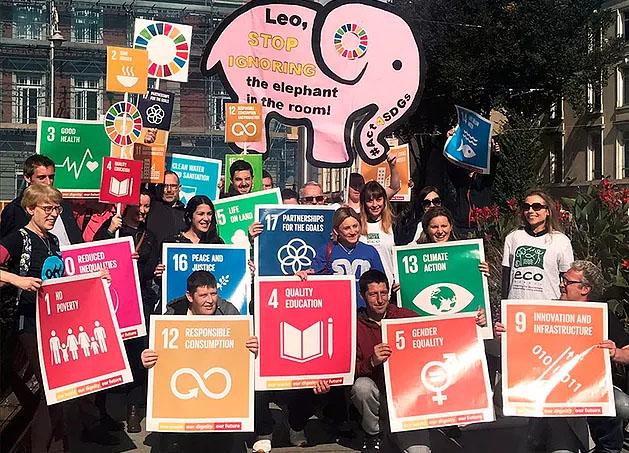
In Dublin, campaigner rallied together on the Global Day of Action, 25 September, in the city centre to highlight the Sustainable Development Goals and Ireland’s efforts to implement them. The event was organised by All Together in Dignity Ireland, in conjunction with members of the DEAR project Make Europe Sustainable for All and Coalition 2030 and focused on the ‘Leave No One Behind’ promise.

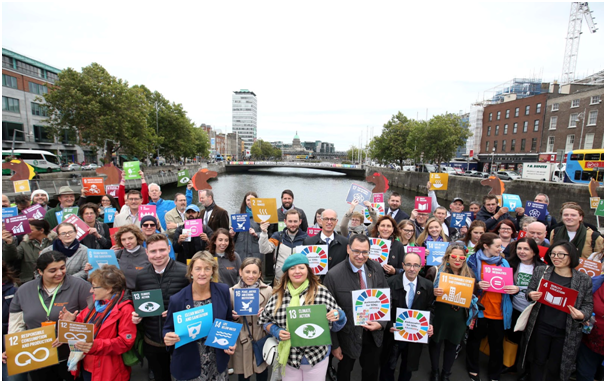
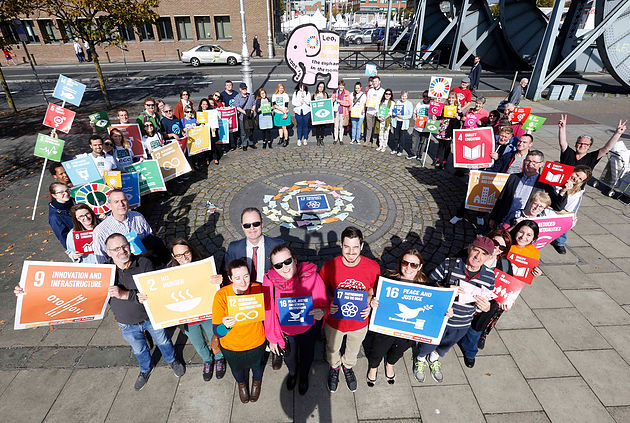
An enormous banner reading ’17 Global Goals and a Promise: To Leave No One behind’ was hung from the Rosie Hacket bridge in Dublin City Centre from 7am – 7pm, and throughout the day, a team of volunteers talked to passersby about the goals. In addition, the public was invited to participate in a ‘Humans of Dublin for the Global Goals’ photo challenge, and the result is a photo montage of over 200 citizens holding an SDG.

At 1.17pm (to symbolise the 17 Goals and 1 Promise) over 100 members of the Coalition, alongside government representatives and ambassadors from 7 EU countries gathered for a group photograph on O’Connell Bridge. The whole group then walked to the Garden of Remembrance to hear messages of support from the President of Ireland and the Belgian Ambassador, as well as statements connecting the ‘Leave No One Behind’ promise to each of the 5 P’s – People, Planet, Prosperity, Peace and Partnership. Finally two young asylum seekers living in Direct Provision in Ireland gave a spoken word performance.

The day was a great success with #ACT4SDGs and #Ireland4SDGs trending on twitter in Ireland, and in addition it was covered by the Irish Times:  https://www.irishtimes.com/news/politics/rally-hears-calls-for-greater-progress-by-ireland-on-un-goals-1.3640993

The Irish Environmental Network is an umbrella network that works to support environmental NGOs through access to funding and services. It consists of environmental NGOs that carry out their work through practical conservation work, campaigning, lobbying and raising public awareness of environmental and conservation needs.

Announcement: launch event of Social Justice Ireland’s Sustainable Progress Index (20 Feb 2018)

By Sara Bourke – Social Justice Ireland

On 20 February, Social Justice Ireland will launch the 2018 Sustainable Progress Index, measuring Ireland’s progress on Economy, Society and the Environment.  As in previous years, we are interested in measuring real progress by marking the UN World Day of Social Justice with this free seminar looking at Ireland’s progress to date in meeting its responsibilities under the Global (Sustainable Development) Goals. The event will take place from 9:30-13:00 at the Carmelite Centre, Aungier Street, Dublin 2, Ireland.

The Index will be presented by Professor Charles MA Clark of St John’s University, New York and Dr Catherine Kavanagh of University College Cork.  Responding to the paper will be Michael Taft, Economic Analyst and Trades Unionist and Niamh Garvey, Head of Policy at Trocaire, a leading global development agency.

Further information on the index will be available on the website www.socialjustice.ie following the launch.

Social Justice Ireland is an independent think tank and justice advocacy organisation that advances the lives of people and communities through providing independent social analysis and effective policy development to create a sustainable future for every member of society and for societies as a whole.

“Young People in Partnership: SDGs in Action” – an update from Ireland

By Carmel Irandoust, World Vision Ireland

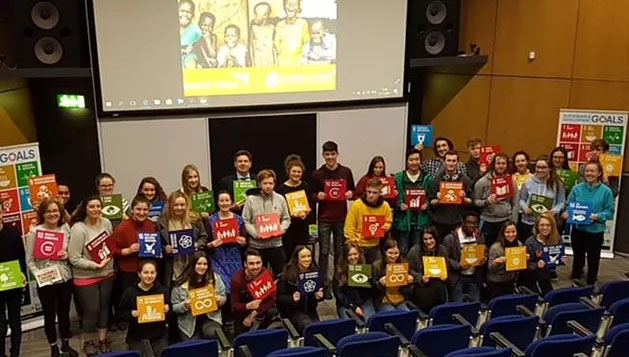
What are the Sustainable Development Goals (#SDGs)? How do they relate to you? To Ireland? To the World? Why have them? Questions you may have asked yourselves but never thought of voicing or just never thought of asking because you didn’t even know they existed! Whatever the case may be… welcome! These are some of the questions we tried to answer when World Vision Ireland gave its very first workshop for the SDG Module taking place in the midst of SDG WEEK at University College Dublin.

Between 35 and 40 students attended the SDGs workshop, some very aware of what the global goals were and some not at all… so we needed to approach the workshop in a creative, informative and inspiring way as well as prac-ti-cal! We tried to keep it simple, straightforward and effective.

The workshop was threefold:

1/ We began the workshop with a short fun multiple-choice quiz, to engage participants and to test their knowledge on the SDGs. We then gave a presentation on Agenda 2030. This involved looking first at the intergovernmental negotiations and processes out of which Agenda 2030 merged (while keeping it light!). We used videos and examples to look at the 17 Goals. We then looked at Agenda 2030 itself, the five P’s for Sustainable Development, along with the Principles behind the Agenda. Real life examples and a fantastic video was used to break-down what this all actually means for people around the world in their everyday lives. Finally, we focused in on Ireland, looking at the SDG Index report and Ireland’s achievement to date. This session ended with information on the Make Europe Sustainable for All Project, and information on events and upcoming plans – which all participants were very keen to hear about!

2/The plan for the workshop was to inform, engage and inspire. We had just informed them. Next, we wanted to engage them in the goals themselves through an activity. Participants were split into groups and each given an envelope containing 5 targets, from across all Goals. The task was to match targets to their correct goals. Some were easy and straight-forward, but other targets, that cross-cut several goals involved more debate and deliberation. By the end, we were all a lot more familiar with the goals and targets!

Next, we needed to inspire!

3/ Time was then dedicated into looking at the relevance of Agenda 2030 as a roadmap for all peoples and most importantly a roadmap for our own lives. What is that WE can do? We looked at the power of young people themselves and their ability to be active agents of change in their respective societies. We inspired ourselves with the example of young people in some of the most challenged areas such as Syria and South Sudan (WV Programmes), who have been striving to implement the global goals in their lives even if they don’t call it that way… particularly with a focus on SDG 16 Peace, Justice and Institutions and the UNSC Resolution 2250 (Youth, Peace and Security Agenda).

We chose this goal because we wanted to inspire our young people and illustrate that even if one may think that this goal can only be achieved “outside of Ireland” much can be done here actually. The example of the young people of Galway we have been working with this past year was used and their interest in focusing on “supporting refugees” as a theme for the year and how they actively tried building relationships between host communities and refugees themselves. Pictures, stories were used. Finally, we ended up with a passage from the President of Ireland about the SDGs and we asked three questions for people to explore in small groups. And we gave a list of three or four concrete ways of how one could become an SDG advocate in his/her own life.

A few concepts came out from this workshop:

  • Universal participation and true partnership are required for this Agenda 2030 to succeed. By universal we mean EVERYBODY: children, young people, elderly, businesses, etc…

  • Young people are at the forefront of this agenda and we need them to take ownership of it and drive it forward. Partnership is key for bringing these goals to life. We need to partner up with young people!

  • These are not only goals but means, tools, which will empower a population to take ownership of its moral, educational, social, economic, intellectual and environmental development and build peaceful and sustainable societies.

  • “We are all developing countries in this international framework.” Irish President Michael D Higgins

  • Ireland must continue to play a pivotal role about the SDGs just like it did at the international level. We have a greater responsibility to bring them to life.

  • The SDGs are a newer version of the Universal Declaration of Human Rights, we need to do justice to them and bring it back as well as the dignity and humanity of the citizens of the world.

Here are some of the comments from students who participated in the workshop:

“I really enjoyed the lecture… It’s important we make this accessible for the common person and this lecture would.” “Really enjoyed the interactive approach of relation the SDGs to our personal lives. If there are some evidence of governments implementing real policies to work towards the SDGs and show concrete progress.” “It inspired me to actively work towards achieving the SDGs.” “It inspired me to do more.” “Very engaging, very interesting, inspirational and educational.” “I thought it was very informational and I liked that students could voice their opinions.” “Really excellent presentation. Especially getting us to examine how we can become SDG advocates in our individual lives. Mix of two speakers and short films combined with group reflections worked well. Well done!”

World Vision Ireland is a child-focussed overseas aid agency. Active in Ireland since 1983 and part of World Vision International, it is the largest privately funded NGO in the world. World Vision provides short and long-term assistance to 100 million people worldwide and has over 40,000 staff members working in 100 countries. For six decades, World Vision has been engaging people to work towards eliminating global poverty and its causes and most importantly engaging people to serve and to attend the needs of the children of the world. We believe every child has the right to a safe environment, access to clean water and food, healthcare and education to build a brighter future. Committed to the most vulnerable, World Vision work with people of all cultures, faiths, ages and genders to achieve transformation. They do this through three main pillars: Relief and Development, policy advocacy and change, and partnerships with a variety of actors.
Ireland: SDGs in Ireland

Make Ireland Sustainable For All, in conjunction with All Together in Dignity (ATD) and the Irish Coalition 2030, marched through the streets of Dublin on 25 September to ask the Irish Government to Light The Way Again and implement the SDGs.

Over 50 people representing the Irish public and members of Coalition 2030, including WV Ireland, Irish Environmental Network (IEN) and ATD rallied and stopped at key landmarks in Dublin. The stops were chosen to highlight the universal dimension of poverty, inequality and climate change and also provided a poignant link between Ireland’s past and the opportunities it has to shape a more just and sustainable world, through the SDGs.

On O’Connell Bridge, in direct view of the city’s busiest crossing, the group hung a 35 metre banner – ‘Will Ireland #Light the Way Again?’. At each stop, representatives of Coalition 2030, Make Ireland Sustainable For All and ATD spoke of the transformational nature of Agenda 2030 and urged the Irish Government to fulfil its promise to ‘Leave No-One Behind’. Dóchas Chief Executive Suzanne Keatinge demanded that the Irish government meet its commitments to the SDGs, declaring the honeymoon period of the Goals over.

The event was broadcast live on social media under #Act4SDGs, received extensive coverage by the Irish Times and was featured on a number of national radio stations drawing attention to the anniversary among the wider Irish Public.

https://www.irishtimes.com/news/environment/irish-response-to-climate-change-woefully-inadequate-say-ngos-1.3233573

Coalition2030: A new national SDG Coalition in Ireland!

Last week, Dóchas took part in the official launch of Coalition2030 in the Mansion House in Dublin, Ireland.

The event was attended by leading civil society and political figures, with Dóchas CEO Suzanne Keatinge and Minister for Communications, Climate Action and the Environment, Denis Naughten TD, addressing the standing room only crowd, which included people such as Martin Fraser, Secretary General in the Department of the Taoiseach, Leader of the Green Party Eamon Ryan TD and Sinn Féin Spokesperson on Foreign Affairs and Trade, Seán Crowe TD. Other speakers at the launch included Sean Healy, Social Justice Ireland, Olive Towey, Concern Worldwide, Oisin Coghlan, Friends of the Earth and Brian Campfield, President of ICTU, who took part in a fascinating panel discussion.

The photo above (Maxwell Photography) features: Dóchas CEO, Suzanne Keatinge and the Minister for Communications, Climate Action and the Environment, Denis Naughten TD.